
Franklin Street is an iconic Chapel Hill landmark — during the school year, students can be seen enjoying an after-class snack, studying at coffee shops or buying UNC merchandise. Visitors, town residents and students dine, shop and work alongside each other. It is a bustling hub of UNC community life. However, due to decreased patronage during the COVID-19 pandemic, some storefronts on Franklin Street have closed their doors permanently, and the effects are still being felt to this day — for instance, Linda’s Bar & Grill, a staple to the Chapel Hill community, closed this January citing loss of revenue and problems with staffing. Despite this, new developments are coming to Franklin Street. Two storefronts at the intersection of Franklin and Columbia streets, — which previously housedMidici and Seafood Destiny Express — will soon have new life. “Those spaces were empty for quite a long time. And I know everybody in our town was hoping that somebody would come along and fill those spaces,” Jeri Lynn Schulke, executive director for Chapel Hill Downtown Partnership, said. “So thankfully, we saw Raising Cane’s come in last year, and with the two other corners being full, it just gives a lot of vibrancy to downtown that was missing with those empty storefronts.” Starbucks, currently located next to Raising Cane’s, will be moving into a larger space across the street to accommodate more patrons. Raising Cane’s purchased the whole building including the retail space Starbucks currently occupies, and what comes next for that space is still to be announced. Playa Bowls, an acai bowl chain based out of New Jersey, will open next to Starbucks' new location later this summer. Playa Bowls will serve a variety of smoothies, acai bowls and drinks inspired by the founder's travels while surfing. Pulp Juice & Smoothie Bar will move into what was previously Seafood Destiny. Dame’s Chicken and Waffles, which closed earlier this year, will be replaced by Voodoo Wings. In May, Cosmic Cantina moved from its location on 128 E. Franklin St. to 118 E. Franklin St. to expand services and make way for developments related to UNC’s Campus Master Plan. “The biggest change is that we're a storefront. Now we're not so much a hole in the wall,” Yeshua Sanchez, manager of Cosmic Cantina, said. The business is now located on the street — attracting more foot traffic — and is decorated with tiles and memorabilia celebrating Chapel Hill. While the new location may be different aesthetically, the menu remains the same, with the addition of a liquor license and a pressed juice bar. "There's a lot of energy that has been put forward both by the Town and the University in trying to bring more workers to downtown and more people working downtown," Schulke said. Michele Phipps, a junior at UNC, said she wishes that there was somewhere students could sit down and chat without having to pay for food or coffee, or places centered around activities rather than dining. “We have the on-campus spots, but it’s difficult to ask people that don’t specifically go to UNC to meet you at UNC places,” she said. “If you have a lot of friends or family outside of it, it’s annoying.” Schulke said that having more places where people work and people live is going to be beneficial to downtown, including for non-student, year-round residents outside of those associated with UNC. “[For] so long, we have been a nine-month economy just really focusing on students. So much of the livelihood of downtown businesses has been reliant on students. When they go away for the summer — or the vast majority do — some businesses really struggled through that,” Schulke said. “So changing our economy to one downtown that can be sustained year-round, is really the right move that the town is making.”
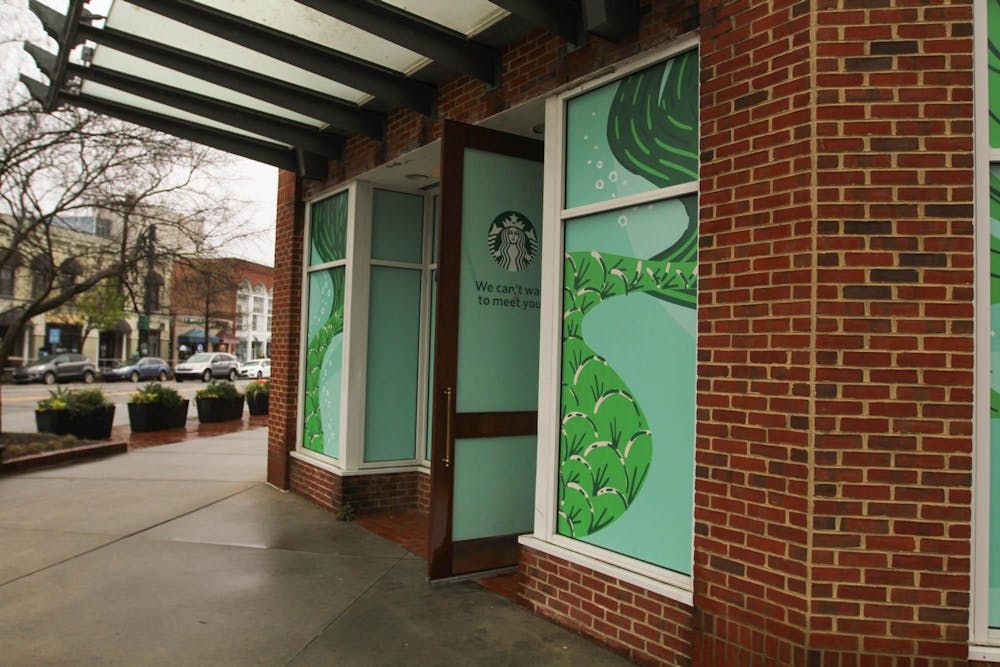
Franklin Street is an iconic Chapel Hill landmark — during the school year, students can be seen enjoying an after-class snack, studying at coffee shops or buying UNC merchandise. Visitors, town residents and students dine, shop and work alongside each other. It is a bustling hub of UNC community life. However, due to decreased patronage during the COVID-19 pandemic, some storefronts on Franklin Street have closed their doors permanently, and the effects are still being felt to this day — for instance, Linda’s Bar & Grill, a staple to the Chapel Hill community, closed this January citing loss of revenue and problems with staffing. Despite this, new developments are coming to Franklin Street. Two storefronts at the intersection of Franklin and Columbia streets, — which previously housedMidici and Seafood Destiny Express — will soon have new life. “Those spaces were empty for quite a long time. And I know everybody in our town was hoping that somebody would come along and fill those spaces,” Jeri Lynn Schulke, executive director for Chapel Hill Downtown Partnership, said. “So thankfully, we saw Raising Cane’s come in last year, and with the two other corners being full, it just gives a lot of vibrancy to downtown that was missing with those empty storefronts.” Starbucks, currently located next to Raising Cane’s, will be moving into a larger space across the street to accommodate more patrons. Raising Cane’s purchased the whole building including the retail space Starbucks currently occupies, and what comes next for that space is still to be announced. Playa Bowls, an acai bowl chain based out of New Jersey, will open next to Starbucks' new location later this summer. Playa Bowls will serve a variety of smoothies, acai bowls and drinks inspired by the founder's travels while surfing. Pulp Juice & Smoothie Bar will move into what was previously Seafood Destiny. Dame’s Chicken and Waffles, which closed earlier this year, will be replaced by Voodoo Wings. In May, Cosmic Cantina moved from its location on 128 E. Franklin St. to 118 E. Franklin St. to expand services and make way for developments related to UNC’s Campus Master Plan. “The biggest change is that we're a storefront. Now we're not so much a hole in the wall,” Yeshua Sanchez, manager of Cosmic Cantina, said. The business is now located on the street — attracting more foot traffic — and is decorated with tiles and memorabilia celebrating Chapel Hill. While the new location may be different aesthetically, the menu remains the same, with the addition of a liquor license and a pressed juice bar. "There's a lot of energy that has been put forward both by the Town and the University in trying to bring more workers to downtown and more people working downtown," Schulke said. Michele Phipps, a junior at UNC, said she wishes that there was somewhere students could sit down and chat without having to pay for food or coffee, or places centered around activities rather than dining. “We have the on-campus spots, but it’s difficult to ask people that don’t specifically go to UNC to meet you at UNC places,” she said. “If you have a lot of friends or family outside of it, it’s annoying.” Schulke said that having more places where people work and people live is going to be beneficial to downtown, including for non-student, year-round residents outside of those associated with UNC. “[For] so long, we have been a nine-month economy just really focusing on students. So much of the livelihood of downtown businesses has been reliant on students. When they go away for the summer — or the vast majority do — some businesses really struggled through that,” Schulke said. “So changing our economy to one downtown that can be sustained year-round, is really the right move that the town is making.”